One reason Paris is so popular with pastry lovers is the unique balance the city brings to French pastry tradition. On the one hand, some of these bakeries may have some of the most historic and traditional recipes that date back centuries, such as those that were served at the Palace of Versailles or perfected in the kitchens of old Parisian homes. On the other hand, there is also the new generation of pastry chefs taking the world of pastry and using it as an art form.
Exploring the best patisseries and the best bakeries in Paris is one of the most authentic ways to understand 'The City of Light'.
Why Paris is Famous for its Pastries
The city has traditionally been acclaimed as one of the greatest pastry centres in the world. The roots of French patisserie stretch back to the Renaissance, when cultural exchange between Italy and France had a significant impact on the development of the palace kitchens. The influence of the Italian chefs, with their buttery pastry and refined sugar work, can be seen in the culinary practice of the present day. Those techniques evolved into a specialised craft defined by precision, balance and technical mastery.
By the seventeenth century, Paris had already become a centre for professional pastry makers. Dedicated shops served royal households and a rising bourgeois clientele. The title pâtissier gained official recognition, signalling the art’s place at the heart of French culinary life. During the nineteenth and twentieth centuries, celebrated houses fortified the city’s reputation. Establishments such as Ladurée and Fauchon opened elegant tea rooms where visitors lingered over coffee and delicate confections.
The language of French pastry has quickly spread beyond the borders of France. Today, many of the pastry techniques taught in schools around the globe trace their origins to the Parisian tradition. Laminated croissant dough, choux for éclairs and creams like crème pâtissière and ganache remain foundational skills taught in professional kitchens around the world.
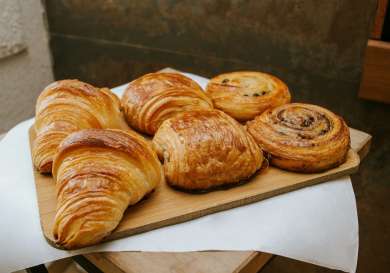
Behind these creations lies precise, often astonishing technique. The flaky croissant, perhaps emblematic of French pastry, depends on exact folds of butter and dough to create its myriad layers. An éclair reveals the airy structure of choux, filled with cream and finished with a glossy glaze. Meanwhile, the mille-feuille balances crisp pastry with a light, silky filling.
Parisian pâtisseries offer macarons, madeleines, Saint-Honoré cakes and seasonal fruit tarts. Each bite is incredibly delicious and carries years of training, apprenticeship and quiet devotion to the craft.
Yet pastry in Paris is not reserved for ceremonies. It is woven into daily life. Locals drop into neighbourhood boulangeries for morning croissants, pause for afternoon pastries with coffee and take-home sweet treats to share. Indeed, stepping foot into a Parisian bakery is one of the truest and quickest ways to experience the soul of the city.
What Makes a Great Parisian Bakery?
Perfect Technique
Technique is the lifeblood of French pâtisserie. The layers in a French croissant should be so well laminated that they shatter with just the light touch of your teeth. The choux pastry should rise evenly in the oven so that there is space inside the shell to fill with cream. The tart shell should be crispy but not heavy so that the flavours and textures are not overpowered by the shell itself.
Exceptional Ingredients
Exceptional pastries begin with exceptional ingredients. For instance, many of the best bakeries in Paris use only the finest French dairy products, including Charentes-Poitou PDO butter or rich cream from Isigny, due to their rich flavour and fat content. The quality of these ingredients is instrumental in producing delicious pastries.
Creativity with Respect for Tradition
While the classical techniques are the basis, creativity helps the bakeries stand out. For example, many pastry chefs have reinterpreted the classic recipes with new flavour combinations or seasonal ingredients. Thus, the mille-feuille may have distinctive combinations of fruits and the macarons may have unusual flavours. These are the ways in which the pâtisseries have evolved from the classical French techniques of centuries ago.
A Reputation Earned Over Time
Lastly, there is the reputation. While there are thousands of bakeries in the city, the good ones earn their place over time. Long queues of locals waiting to buy their products, positive word of mouth and inclusion in various culinary guides are indicative of a good bakery. While the renowned traditional bakeries cannot be missed, we would also recommend you to pay a visit to the neighbourhood favourites if you are looking for creative flavours.
The Role of Artisan Bakers and Pastry Chefs
At the heart of every great bakery is an artisanal baker or pastry chef. French pastry chefs spend years studying the craft, learning about bread, viennoiserie and even elaborate pastries before moving on to apprenticeships and working in professional environments.
Their work is not just about following a recipe. It is about controlling the fermentation time of dough, making appropriate adjustments to the dough depending on the humidity and deciding at what precise time the pastries need to come out of the oven. For instance, the type of butter used, the type of flour used and the temperature at which the baking is done can greatly affect the end product.
Many of these pastry chefs also have a team of apprentices to whom they pass on their knowledge, refined over the course of several generations. At the same time, they continue to innovate with new ingredients and flavours of the seasons, to ensure that French pâtisserie not only evolves but also remains rooted in its rich culinary traditions.
Why It’s Worth Exploring Beyond the Famous Names?
Although the famous Pierre Hermé pâtisserie may be the most well-known and visited pâtisserie in Paris, it is only one aspect of the Parisian pastry scene. Across Paris, neighbourhood boulangeries and pastry shops serve locals daily with the best croissants, chocolate pastries, shortbread cookies and other sweet treats. Exploring both celebrated pâtisseries and neighbourhood bakeries reveals the full depth of Parisian pastry culture.
12 Best Parisian Bakeries for Pastry
Pierre Hermé
Pierre Hermé is considered one of the most important names in contemporary French pastry. He is referred to as the “Picasso of Pastry” and the “King of Modern pâtisserie.” He revolutionised the way the world views desserts by introducing innovative flavours and artistic ideas. The Pierre Hermé brand began its international expansion in 1998, with its first Paris shop opening in 2001 at 72 Rue Bonaparte in Saint-Germain-des-Prés.
Why it stands out:
What distinguishes Hermé is his philosophy of flavour architecture. Instead of focusing solely on sweet flavours, Pierre Hermé uses a multi-dimensional flavour profile in his pastries. Some of his legendary creations include Ispahan, featuring a mix of rose, raspberry and lychee; Mogador, with milk chocolate and passion fruit; Infiniment Vanille; Carrément Chocolat; and his famous 2000 Feuilles. Some of his innovative flavour pairings include olive oil and vanilla, as well as chocolate and passion fruit, which revolutionised the way macarons and entremets could be made.
Practical tip:
Begin your visit at the flagship boutique at 72 Rue Bonaparte in Saint-Germain-des-Prés or the elegant shop at 39 Avenue de l’Opéra. Arriving earlier in the day ensures the best selection, as seasonal pastries and signature creations often sell out by late afternoon.
Ladurée
Few pastry houses capture the romance of Paris quite like Ladurée. Founded in 1862 during the Second Empire, the brand has spent more than 160 years refining the art of French pastry while becoming synonymous with the Parisian macaron and Belle Époque elegance. From the historic Rue Royale address to its salons on the Champs-Élysées, Ladurée represents one of the most recognisable expressions of French luxury pâtisserie.
Why it stands out:
Ladurée’s defining contribution to pastry history arrived around 1930, when Pierre Desfontaines created the modern double shell macaron by sandwiching two almond meringue shells with a soft ganache filling. The result was a delicate, luxurious pastry that quickly became an icon of French gastronomy. Today, Ladurée continues to present an ever-changing palette of macaron flavours, from classic pistachio and vanilla to salted caramel and seasonal creations.
Beyond the pastries themselves, Ladurée’s salons are part of the experience. Soft pastel interiors, gilded mirrors and ornate décor evoke the elegance of historic Parisian tearoom culture.
Practical tip:
Visit the Rue Royale or Champs-Élysées salons during weekday mornings or mid-afternoons to avoid long queues. Begin with a macaron assortment, then add a seasonal pastry to experience both Ladurée’s classics and its limited-edition creations.
Du Pain et des Idées
In a quiet corner of the 10th arrondissement, Du Pain et des Idées feels like a preserved fragment of old Paris. The bakery occupies a historic shop dating back to 1875 and stepping inside reveals painted ceilings, antique mirrors and a warm atmosphere that reflects more than a century of baking tradition.
Why it stands out:
The bakery gained international recognition under baker Christophe Vasseur, who revived the space with a commitment to small-batch craftsmanship and traditional techniques. While the bakery produces excellent breads, its delicious pastries have achieved near-legendary status among locals and visitors alike.
Particularly famous are the escargot pastries, spirals of laminated dough filled with pistachio and chocolate or praline. Combined with the bakery’s celebrated Pain des Amis bread, these pastries helped transform Du Pain et des Idées into one of Paris’s most beloved neighbourhood bakeries.
Practical tip:
Arrive early in the morning to enjoy the pistachio-chocolate escargot while it’s still warm. Then take your pastries to the nearby Canal Saint-Martin for a relaxed breakfast beside the water.
Stohrer
For anyone interested in the history of French pastry, Stohrer is an essential address. Founded in 1730 by Nicolas Stohrer, pastry chef to King Louis XV, it is widely considered the oldest pâtisserie in Paris. Located on Rue Montorgueil, the boutique has become a living monument to the city’s culinary heritage.
Stohrer’s royal origins remain visible throughout the shop. Its lavish interior, decorated with ornate mouldings and painted ceilings created by a student of the Opéra Garnier artist Paul Baudry, creates an atmosphere that feels closer to a historic salon than a modern bakery.
Why it stands out:
The pâtisserie is known for preserving classic French desserts that connect modern visitors to centuries of culinary tradition. Among its most famous specialities is the especially rum baba or baba au rhum, a rum-soaked pastry with royal roots that remains one of the house’s signature creations.
Practical tip:
Take a moment to admire the historic interior before choosing your pastries. The baba au rhum is the essential order, ideally enjoyed during a quieter weekday morning when the shop’s atmosphere can be fully appreciated.
Cyril Lignac Pâtisserie
Cyril Lignac pâtisserie is a modern chapter in the history of Parisian pastry making. The pâtisserie was founded by celebrity chef Cyril Lignac in collaboration with pastry chef Benoît Couvrand. The boutiques offer a modern twist on classic French desserts in a sophisticated yet inviting atmosphere inspired by Parisian culture.
Why it stands out:
It’s the approach that feels both approachable and quietly inventive to classic French desserts. Although classic French desserts remain at the core of their creations, they offer a creative twist in terms of texture, taste and visual appeal. Among their most famous creations is L’Équinoxe, a light dessert consisting of a combination of vanilla cream, salted caramel and biscuit. In addition, classic French pastries such as éclairs, lemon tartlets, or baba au rhum can be enjoyed in a modern format. Viennoiseries and breads offer a similar level of sophistication and expertise.
Practical tip:
There are a number of branches of this boutique in Paris, including one on Rue de Chaillot near Trocadéro. Goûter time is a late afternoon snack in France. We recommend you to try L’Equinoxe followed by a classic French dessert such as an éclair, for a modern twist on a classic French dessert.
Angelina Paris
Angelina Paris is one of Paris’s most famous tearooms. The establishment was founded in 1903 and quickly became a favourite among Paris’s artistic community, aristocracy and travellers in search of elegant pastries in a refined atmosphere. Angelina remains a symbol of Parisian excess and Belle Époque elegance, known for traditional pastries that truly taste divine.
Why it stands out:
The experience extends far beyond the confines of the pastry case. Marble-topped tables, gilded mirrors and soft lighting evoke the atmosphere of the historic Parisian salons. However, the main attraction is the decadent dessert selection. Angelina’s most popular dessert is the Mont-Blanc, consisting of meringue, whipped cream and chestnut vermicelli. Another popular dessert is the house special hot chocolate, L’Africain, a rich drink made from special cocoa from Africa. At the Rivoli branch near the Louvre Museum, the shop sells hundreds of Mont-Blanc pastries on busy days.
Practical tip:
Visit the Rue de Rivoli branch near the Louvre Museum during the early morning or mid-afternoon. Order the Mont-Blanc and a cup of hot chocolate. It is best to share these two desserts.
Jacques Genin
Jacques Genin is one of the most respected pâtissiers and chocolatiers in Paris because of his dedication to the craft. He has been supplying luxury hotels and restaurants with his desserts and chocolates for years before finally opening his own shop and tea salon in the Marais in 2008.
Why it stands out:
The interior of the shop is unlike other pastry shops. It is more like a jewellery store because of the glass display case filled with chocolates, caramels and pastries arranged with great precision. Genin is known for his dedication to the freshness of the ingredients used in the refined desserts and chocolates. He uses special ingredients in his ganaches, including herbs and spices. Another popular dessert is the millefeuille, made fresh to order for each customer. This is a testament to Genin’s reputation as one of the best chocolatiers in France.
Practical tip:
Instead of ordering the pastries to go, have a seat inside the tea salon and order the made-to-order millefeuille. Then order tea or hot chocolate to go with the millefeuille.
Le Meurice Pastry Boutique (Cédric Grolet)
No other pastry artist has impacted the look of modern desserts as significantly as Cédric Grolet. His Le Meurice Pastry Boutique, which opened in 2018, quickly became one of Paris' most sought- after pâtisseries.
Why it stands out:
Cédric Grolet’s pastries are works of art that look like fruit sculptures. His lemons, apples, hazelnuts and other fruit-inspired creations look almost identical to their natural counterparts. However, inside these fruit inspired masterpieces, Cédric Grolet has crafted intricate designs of mousse, fruit, cream and other textures. His artistic approach to pastries earned him the prestigious title of The World’s Best Pastry Chef in 2018.
Practical Tip:
The Le Meurice Pastry Boutique is located at Rue de Castiglione in the 1st Arrondissement of Paris. If possible, try to arrive at the boutique before it opens to avoid sold out items, particularly on weekends.
Maison Aleph
Maison Aleph offers one of the most distinctive interpretations of Parisian pâtisserie, delivering some of the most unique French pastries in Paris. Founded by Myriam Sabet, Maison Aleph is known for its unique blend of French pâtisserie traditions and Middle Eastern flavours.
Why it stands out:
Maison Aleph’s unique style of French pastries is perhaps its most striking feature for any visitor to Paris. The pâtisserie’s French pastries are infused with Middle Eastern traditions, making these pastries look unique and familiar at the same time. Visiting Maison Aleph is like entering a distinctive world where French technique meets Levantine flavour.
Practical tip:
Select a mixed box of small pastries or “nids.” This will give you the opportunity to try different tastes and enjoy your coffee or tea inside the shop.
Boulangerie Utopie
Boulangerie Utopie has quickly become the go-to destination for Parisians looking for innovative pastries and artisanal bread products. Founded in 2013 by two passionate bakers, the bakery is the realisation of a shared dream after years of travelling and training.
Why it stands out:
The philosophy of this innovative bakery is based on creativity and tradition. The two bakers consider their bakery a laboratory for creative bread and pastry products. Classic products are reinvented with innovative flavours, textures and fermentation methods. The innovative approach of the bakers has resulted in the bakery receiving many honours, including one of the best baguettes in Paris.
Practical tip:
Go to the bakery on Rue Jean-Pierre-Timbaud early in the morning and order a freshly baked baguette and one of the innovative pastries to experience the innovative approach of the bakers.
The Art of Parisian Patisserie Experience (Sybarite Experience)
For those interested in learning more about Parisian pâtisserie and its history, The Sybarite’s Art of Parisian pâtisserie Experience is a unique experience. The workshop allows visitors to learn about pâtisserie directly from a master pastry chef in Paris.
Why it stands out:
Unlike traditional cooking classes, this experience combines both skill, history, techniques, and cultural context. You can learn the fundamentals of croissant dough lamination, éclair piping and tart construction, along with the history of Parisian pâtisserie. One can also add a visit to renowned pastry boutiques, artisanal chocolate makers and food markets, depending on the course chosen.
Practical tip:
The workshop is usually a private half-day or full-day experience. Bookings are recommended in advance. Consider adding the optional pâtisserie tour to enhance your culinary experience.
More information about Parisian Patisserie Experience here
Des Gâteaux et du Pain
Des Gâteaux et du Pain is well appreciated by pastry lovers for its sophisticated take on both bread and pastry. Founded in 2006 by pastry chef Claire Damon and baker David Granger, this pâtisserie has quickly become one of the top artisan bakeries in Paris.
Why it stands out:
The shop design is divided between beautifully crafted bread on one side and elegantly designed petits gâteaux, almost like a display of artwork, on the other. Claire Damon is a pastry chef who has worked under some of the most renowned pastry chefs in France, such as Pierre Hermé and Christophe Michalak and this is clearly seen in her elegant pastry creations. If you are not fond of overly sweet baked goods, try Saint-Honoré. The signature dishes that you can't afford to miss would be the iconic lemon tart or Tarte au Citron, scrumptious fruit tarts, and Mont Blanc.
Practical tip:
Select one seasonal fruit-based pastry and one signature bread to experience the full philosophy of this bakery.
What Pastries Should You Try in Paris?
Visitors will discover some of the best pastries in Paris across the city’s bakeries and pastry shops, including croissants, éclairs, mille-feuille and fruit tarts. These pastries reflect centuries of craftsmanship and careful attention to ingredients and technique. Parisian pastry chefs constantly reinvent classic desserts with seasonal fruits, spices and refined presentation.
The following is a list of some of the best pastries in Paris that visitors can sample when exploring the city.
Classic Pastries to Seek Out
One of the first pastries that visitors should try is the croissant. The croissant remains the benchmark of French pastry. It's famed for its delicate layers, crispy crust and golden brown colour that has become standard when it comes to these types of pastries.
Another type of pastry that visitors should try is the éclair. Made from choux pastry, the éclair expands in the oven to form a delicate shell that is later filled with pastry cream and then glazed. The best versions balance light pastry with rich chocolate and smooth custard.
Another essential dessert is the mille-feuille, meaning “a thousand layers” in French. This dessert is actually composed of layers of puff pastry and pastry cream. The combination is rich and delicious, with the crunch and smoothness complementing each other in each bite. Some pâtisseries finish it with fondant icing and/or praline glaze. Some popular examples can be found at Carette and Cyril Lignac’s Aux Prés.
Just as important are the Fruit Tarts, which showcase the natural sweetness of fruits in the different seasons. Among the fruit tarts is the Tarte Bourdaloue, which is the classic pear tart with frangipane and cream filling. However, many bakeries also have seasonal fruit tarts with figs, berries and other fruits.
Seasonal Creations and Chef Specialities
While classic desserts remain essential to Parisian pâtisserie, seasonal creations reveal the imagination of contemporary pastry chefs. As the seasons change, the pâtisseries introduce new and interesting flavours.
For the fall season, the pâtisseries introduce pastries with hazelnut, cinnamon, pumpkin and chestnut flavours. In the spring and summer, the pâtisseries introduce fruits such as strawberries, apricots and figs in their pastries and desserts. Pierre Hermé is known to introduce seasonal creations with unique flavour combinations, such as the fig and hazelnut combination. La pâtisserie des Rêves offers seasonal creations with fruits as the main ingredient.
New and creative pastry chefs also introduce unique and interesting desserts that can be found nowhere else. Nina Métayer offers flower-shaped pastries with unique flavour combinations such as pear, grapefruit and hibiscus. L’Éclair de Génie specialises in gourmet éclairs with unique and interesting flavours and fillings. Maison Aleph offers Middle Eastern-inspired pastries with pistachios and orange blossom as main ingredients.
For travellers, the ritual is simple. When entering any bakery, we recommend you to ask for the pâtissier’s seasonal specialities. These are likely to be the most creative and refined of modern French pâtisserie.
In Paris, every pâtisserie counter is like a storybook. Exploring them remains one of the city’s most rewarding culinary pleasures, especially for anyone searching for the best pastries in Paris.
Tips for Visiting Parisian Bakeries
Visiting Parisian bakeries at the right time is essential to avoid queues and ensure that you enjoy your visit to the fullest. Paris pastry shops tend to open their doors relatively early, between 7:00 and 7:30 in the morning. Baking also starts very early in these bakeries, so it is likely that bakers are at work by 6:00 or 6:30 in the morning.
For the freshest pastries, arrive shortly after opening, when the first trays of croissants emerge from the ovens for customers. However, some bakeries also bake in the afternoons and these are available around school pick-up times.
Queues in Parisian bakeries are generally managed in an efficient but relaxed manner. People stand at the back of the queue and wait for their turn until they are spotted by the staff of the bakery. Once spotted, it is recommended to stand up straight and order your pastries or bread.
Unlike the case in the café, the majority of the bakeries in the area are takeaway-based. People order at the counter and then leave the store immediately after paying for the products they ordered.
Exploring neighbourhood bakeries is one of the best ways to find hidden gems in Paris. While the city centre hosts famous pâtisseries, residential districts often reveal equally remarkable bakeries. Residential areas such as the 18th, 19th and 20th arrondissements are home to bakeries that cater mainly to the residents and offer a high level of traditional practices.
Montmartre, located in the 18th arrondissement, is home to several bakeries, such as Le Grenier à Pain, known for its award-winning baguettes and croissants enjoyed by locals.
In contrast, the Latin Quarter and 6th Arrondissement offer a unique combination of student life and historical pastry traditions. Bakeries such as La Maison d’Isabelle or small side street boulangeries are known for their delicious butter croissants and French pastries.
Final Thoughts
Paris offers some of the world’s finest pastry experiences. Across the city, bakeries transform butter, flour and sugar into desserts that feel both timeless and refined. From historic pâtisseries to modern pastry boutiques, every neighbourhood reveals its own interpretation of French dessert culture.
While exploring Parisian bakeries is essential, discovering them through thoughtfully curated experiences can elevate the journey even further. For travellers seeking the best bakeries in Paris with deeper culinary discovery, we recommend you enjoy the curated access to exceptional experiences and soak in one of the most cherished traditions of the city like a true insider.